Top > Technical-notes > VNWA > How to use Create-dB&Zgraph-from-VNWAs1p calculation sheet.

How to use Create-dB&Zgraph-from-VNWAs1p calculation sheet.

First, measure and extract the S21 frequency characteristic data of the line filter on the page below.
Import the extracted data into EXCEL. ↓↓
Import Line-Filter's VNWA data into EXCEL.
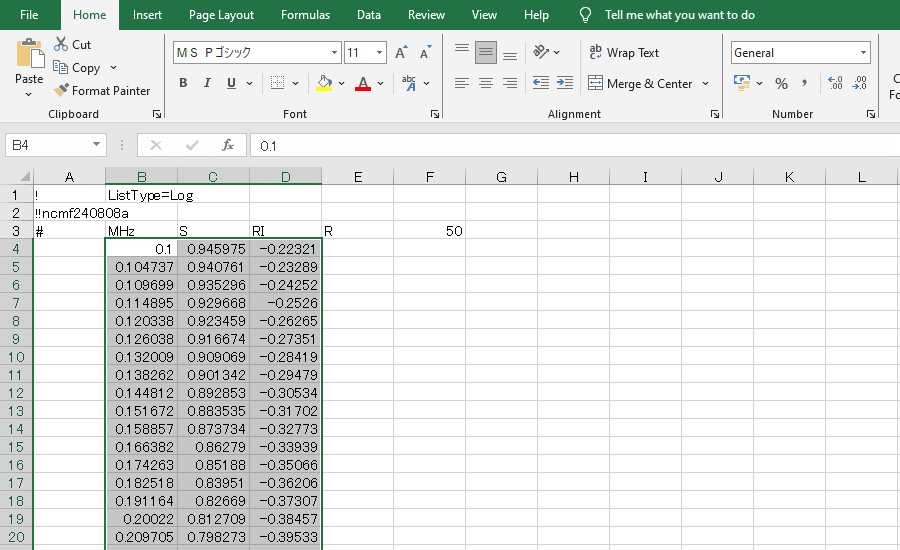
Select and copy from Selecting the minimum to maximum frequency in columns B, C, and D.
This image shows how to use an Excel spreadsheet to import line filter S21 characteristic (S1p) data stored in a Vector Network Analyzer (VNWA3E) DG8SAQ into Excel and quickly create a frequency response graph. This image shows how to select and copy from Selecting the minimum to maximum frequency in columns B, C, and D.
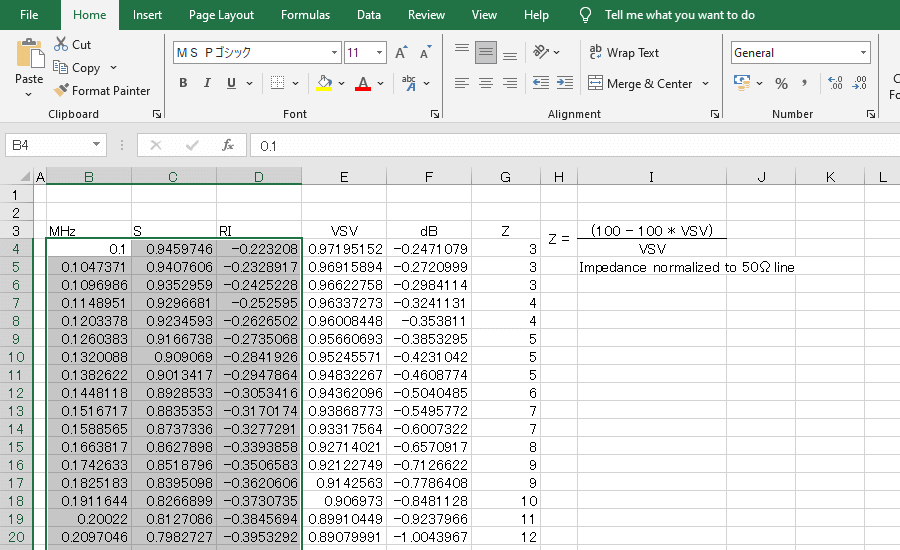
Paste it into the calculation sheet at the same coordinates.
This image shows how to use an Excel spreadsheet to import line filter S21 characteristic (S1p) data stored in a Vector Network Analyzer (VNWA3E) DG8SAQ into Excel and quickly create a frequency response graph.  This image explains how to paste it into the calculation sheet at the same coordinates.
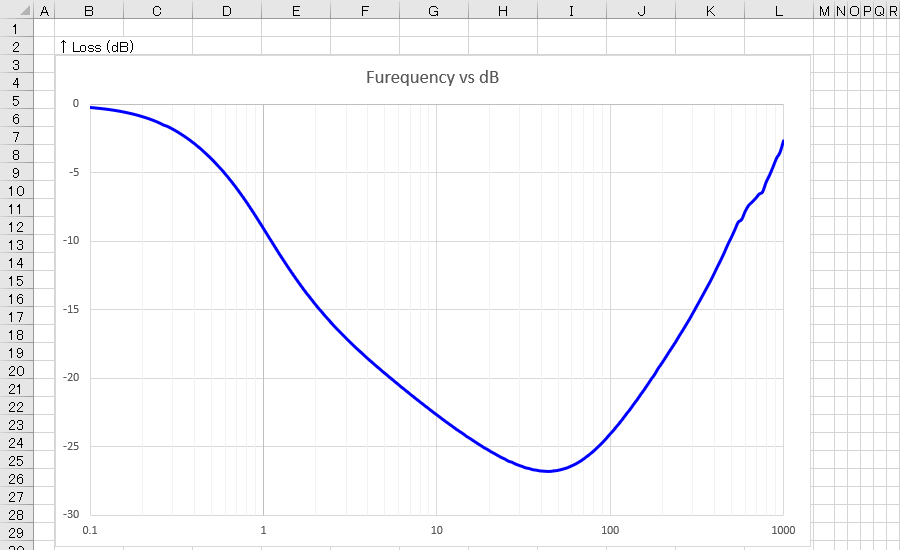
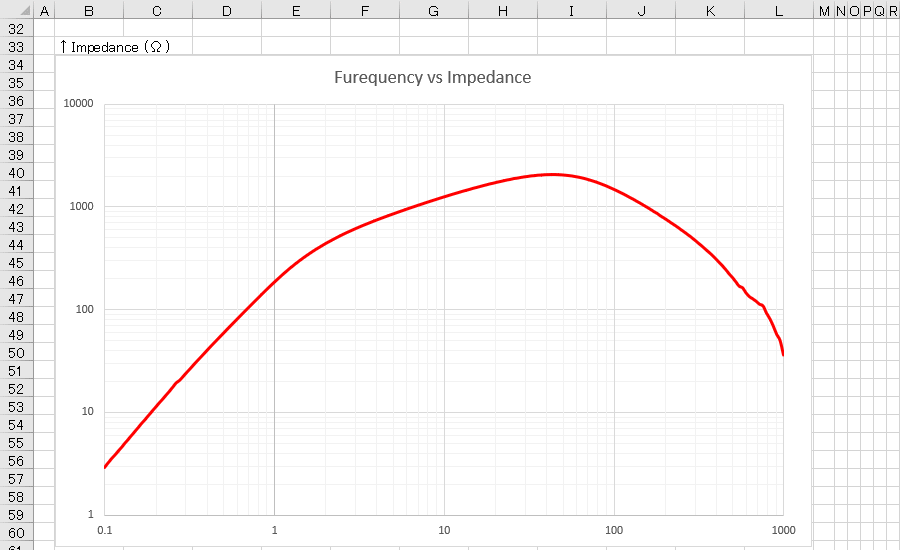
If you check the Graph cell, you will see that the Loss (dB) graph and Impedance (Ω) graph are complete.
This image shows how to use an Excel spreadsheet to import line filter S21 characteristic (S1p) data stored in a Vector Network Analyzer (VNWA3E) DG8SAQ into Excel and quickly create a frequency response graph.  This image shows an dB frequency characteristic graph completed using the Excel spreadsheet.
This image shows how to use an Excel spreadsheet to import line filter S21 characteristic (S1p) data stored in a Vector Network Analyzer (VNWA3E) DG8SAQ into Excel and quickly create a frequency response graph.  This image shows an impedance frequency characteristic graph completed using the Excel spreadsheet.
Click here to download CalculateGraph-dBZ-from-VNWAs1p.xlsx

© SMPS Solution